



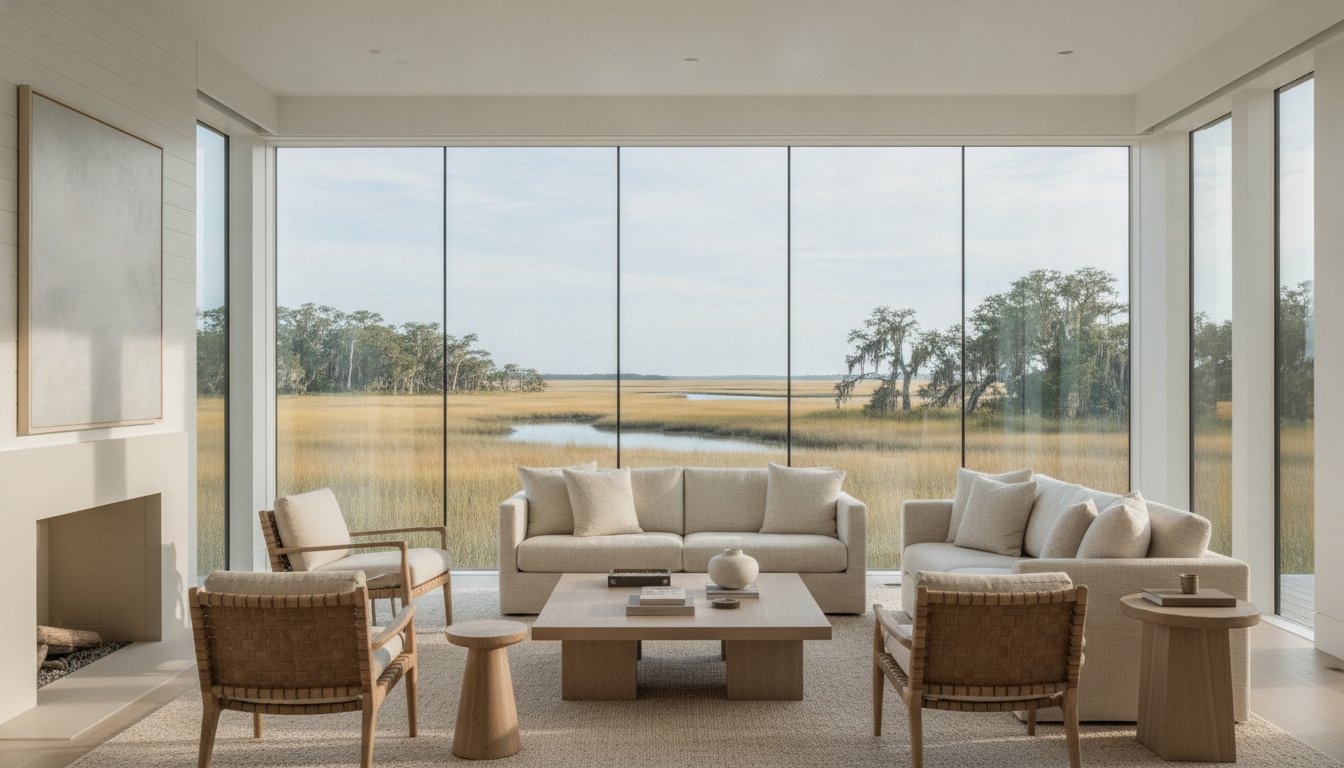
The human eye possesses a sophisticated dynamic range that even the most advanced consumer sensors cannot replicate. This technical gap often leaves luxury interiors in the Lowcountry looking far more somber on screen than they feel in person. You've likely walked through a sun-drenched estate in Bluffton or Hilton Head, only to find the resulting images marred by muddy shadows and "blown-out" windows that obscure a pristine coastal view. It's a common frustration for professionals who realize their digital marketing doesn't reflect the actual architectural integrity of the build.
We understand that a premium listing requires more than just a bright exposure; it demands a precise balance of luminosity and spatial clarity. In this article, you'll discover why standard cameras fail to capture the true atmosphere of high-end interiors and how professional architectural photography preserves the delicate details of a room. We'll examine the technical limitations of consumer gear and help you identify the markers of editorial-quality lighting. By understanding how to avoid frequent real estate photography editing mistakes, you can ensure your property presentations command the authority they deserve in the Hilton Head and Beaufort markets.
Key Takeaways
• Understand the technical gap between human vision and camera sensors to better manage lighting expectations in complex luxury interiors.
• Recognize how common real estate photography editing mistakes, such as aggressive HDR processing, can inadvertently devalue a premium property.
• Learn the importance of advanced techniques like the "window pull" to capture the stunning Lowcountry views that define high-end coastal architecture.
• Discover how editorial-grade photography serves as a sophisticated marketing asset that reinforces professional trust and attracts discerning clients.
The Disconnect Between Human Vision and Camera Sensors
The human eye is a master of biological adaptation. When you step into a sprawling waterfront estate in Sea Pines, your retina and brain work in tandem to resolve the deep textures of reclaimed heart pine floors while simultaneously processing the shimmering light of the Atlantic through the windows. Digital sensors, however, lack this fluid intelligence. They are bound by a fixed linear response to light, forcing a rigid choice between preserving the view or illuminating the architecture. This technical challenge is the foundation of High-Dynamic-Range (HDR) Imaging, a process designed to bridge the gap between what we see and what a single exposure can capture.
When a camera is faced with the extreme contrast of a Lowcountry sun and a shaded interior, it often defaults to an exposure compromise. To prevent the windows from turning into featureless white boxes, the camera underexposes the room, leaving corners dark and mid-tones muddy. Attempting to fix this fundamentally flawed exposure by simply "cranking up the shadows" in software is one of the most visible real estate photography editing mistakes. This shortcut introduces digital noise, a grainy texture that erodes the crisp, sophisticated finishes of a luxury build and signals a lack of professional oversight.
Defining Dynamic Range in Architectural Media
In architectural media, dynamic range represents the ratio between the brightest highlights and the deepest shadows within a single frame. For a home in Palmetto Bluff featuring floor to ceiling glass, this range often exceeds the capacity of a standard raw file. Professional sensors have wider latitudes, yet even they require strategic execution to maintain clarity. Ultimately, dynamic range is the primary technical barrier to achieving a realistic and inviting property presentation on screen.
The Illusion of Natural Light
A room may feel bright and airy in person because our peripheral vision and cognitive processing fill in the spatial volume of the environment. A camera sensor sees only raw data. It lacks the ability to perceive the "feeling" of a space. Without professional intervention, amateur equipment often renders coastal interiors as dark, grainy voids. It simply cannot see into the shadows without completely losing the highlight detail of the surrounding landscape. This results in a flat, uninspiring image that fails to validate the craftsmanship of the architect or the vision of the interior designer.
Why Automated Settings Fail Luxury Interiors
Relying on the automated brain of a camera often results in a visual compromise that devalues high-end architecture. Most consumer devices are programmed to find an "average" exposure by looking for a neutral midpoint. In a custom-designed home with intricate lighting layers, this averaging leads to muddy mid-tones and a loss of the crispness that defines luxury builds. While the dynamic range of the human eye allows us to see detail in every corner, automated settings frequently sacrifice the nuances of a room to prevent the sky from appearing too bright.
This technical limitation is where many real estate photography editing mistakes begin. When a camera fails to capture the scene correctly at the moment of the shutter click, the subsequent attempts to "fix" the image in post-production often look forced. Automated exposure systems simply don't have the aesthetic judgment required to prioritize the texture of a hand-scraped floor or the subtle sheen of a marble countertop. Instead, they produce a flat, uninspired file that lacks the emotional resonance needed for premium marketing.
The Pitfalls of Mobile Photography for High-End Listings
Modern smartphones use computational photography to compensate for their small sensors. This process applies aggressive, artificial sharpening and noise reduction that can ruin the integrity of natural materials. The rich grain of a mahogany door or the soft weave of designer upholstery often ends up looking "crunchy" or plastic. For luxury Realtors in Hilton Head and Bluffton, the "just snap a few quick ones" approach usually results in images that lack architectural depth and fail to justify a high asking price. These automated shortcuts strip away the spatial volume that makes a coastal estate feel grand.
Mixed Lighting and Color Temperature Challenges
One of the greatest hurdles for automated settings is Auto White Balance (AWB). Luxury interiors often feature a complex mix of light sources, from warm 2700K LEDs to the cool, blue hue of Lowcountry coastal daylight. AWB typically gets confused by these conflicting temperatures, resulting in rooms that look sickly yellow or unnaturally blue. Professional gear and techniques allow for the balancing of these temperatures, ensuring a clean, editorial look that accurately represents the work of interior designers and custom home builders. Achieving this level of precision requires more than a standard sensor; it demands a partner who understands the nuances of professional property photography to elevate the presentation of the home.
Wide-angle mobile lenses often introduce significant barrel distortion. While they attempt to pull in more light and show more of the room, they end up bending walls and stretching furniture. This creates a "funhouse" effect that is immediately jarring to a sophisticated buyer. True architectural clarity requires specialized lenses and a meticulous eye for vertical alignment, ensuring that the property's structural integrity remains the focus of every frame while avoiding common real estate photography editing mistakes related to perspective.
The Pitfalls of Overprocessed HDR in High-End Listings
Many service providers attempt to bypass technical sensor limitations by leaning heavily on High Dynamic Range (HDR) processing. While intended to balance light, aggressive software-driven HDR is responsible for some of the most egregious real estate photography editing mistakes in the luxury market. This approach often results in a "cartoonish" aesthetic characterized by unrealistic colors, glowing halos around rooflines, and unnaturally flat lighting that strips a home of its dimension. When every corner of a room is rendered with the same intensity, the architectural depth disappears. This leaves the property looking more like a flat digital rendering than a physical masterpiece, failing to convey the true volume of the space.
Sophisticated property presentation relies on tonal restraint. Shadows are not defects; they are essential tools that define spatial volume and guide the viewer's eye through an interior. Overprocessing devalues luxury properties by making them look cheap or artificial. A discerning buyer looking at a waterfront estate in Beaufort expects to see the subtle interplay of light and dark that suggests a real, lived-in experience. Understanding how cameras differ from the human eye is crucial for editors, yet the goal should be to replicate the eye's elegance, not to exceed it with garish filters.
The Case for Architectural Realism
High-end buyers respond to authenticity. Editorial-quality imagery captures the true craftsmanship of a custom build by preserving the natural textures of stone, wood, and metal. In the Lowcountry, where natural light is a primary architectural feature, intentional lighting creates a sense of place that flashy HDR cannot replicate. Luxury is defined by quality and restraint, not by the use of aggressive digital filters that obscure the architect's original intent or the custom builder's attention to detail. By maintaining realism, you validate the property's value and the expectations of your high-net-worth clientele who are trained to spot quality.
Avoiding the Cartoonish Aesthetic
Poor-quality outsourcing often relies on bulk editing scripts that ignore the specific nuances of a room. Tell-tale signs include glowing edges and "nuclear" green lawns visible through windows. Such imagery can break buyer trust before they even step foot on the property. In the competitive Hilton Head market, honest photography has a significant psychological impact on serious prospects who value transparency. It's Houzpics | Real Estate Photographers in Hilton Head, SC's commitment to avoiding distorted, ultrawide imagery that misrepresents spatial reality. True luxury presentation requires a commitment to accuracy. We ensure that the digital first impression matches the physical reality of the private club community or historic property, fostering trust from the very first interaction.
Masterful Lighting: How Professionals Preserve Architectural Integrity
The "Window Pull" is a fundamental technique in sophisticated architectural photography. It ensures that the breathtaking views of the Calibogue Sound or the May River are preserved while maintaining a luminous, natural interior. Unlike the flat results of overprocessed HDR discussed previously, this method involves capturing separate exposures for the windows and the room. These are then blended with surgical precision to ensure the view looks exactly as it does to the naked eye. This balance is critical for luxury listings where the landscape is as much a part of the home's value as the interior finishes.
Professional lighting also relies on the strategic use of supplemental light. This isn't about flooding a room with artificial strobes that create harsh reflections or unnatural glares. Instead, it involves filling deep shadows to reveal the true texture of high-end materials like tabby, natural stone, or reclaimed heart pine. By using subtle off-camera light, a photographer can guide the buyer's eye through the floor plan, highlighting the spatial flow of a Beaufort historic home or a modern Bluffton build. Avoiding common real estate photography editing mistakes means getting the light right at the source, rather than trying to manufacture it later in software.
Technical Precision at the Point of Capture
Achieving this level of clarity requires high-end sensors with superior color depth and dynamic range. While automated software algorithms attempt to guess where light should be, manual exposure blending remains the gold standard for clean, noise-free results. This meticulous approach ensures that the digital file retains the architectural integrity and material honesty of the structure. To see how these techniques transform property presentation, explore our Professional Property Photography services.
Capturing the Lowcountry Atmosphere
Atmosphere is everything in the South Carolina Lowcountry. Timing a shoot for the Golden Hour or Twilight allows coastal light to interact with waterfront properties in a way that feels aspirational and serene. This soft, directional light emphasizes the geometry of the architecture and the lushness of private club community landscapes. For a broader perspective on capturing these environments, read our Drone Real Estate Photography in Hilton Head and Bluffton: A Lowcountry Guide.
Investing in professional property photography is ultimately an investment in the home's perceived market value. High-quality media validates the listing price and reinforces the professional brand of the Realtor, the architect, and the custom builder. Ready to elevate your next project? Book your architectural session today to secure editorial-quality results for your listing.
While high-end photography is a cornerstone of luxury marketing, a successful sale also depends on an efficient listing strategy; to see how professionals streamline this process, check out Congress Realty.
Elevating Your Brand with Editorial-Quality Imagery in the Lowcountry
The final impression of a luxury listing depends on the technical restraint of its visual representation. In the competitive corridors of Hilton Head and Bluffton, your media choice communicates your respect for the property's architectural integrity. By steering clear of common real estate photography editing mistakes, you signal to discerning sellers that you understand the nuance of their investment. This level of visual literacy doesn't just sell a single home; it builds a reputation for excellence that attracts future high-net-worth listings. It transforms your marketing from a mere announcement into a sophisticated professional dialogue.
High-quality architectural media acts as a unifying force between the various professionals involved in a project. When a custom home builder or interior designer sees their work presented with spatial clarity and natural tonal balance, it validates their referral of your services. It transforms a simple listing into a portfolio piece that every stakeholder can use with pride. This collaborative success is what defines a truly sophisticated property presentation. A technically credible visual portfolio provides a long-term ROI by cementing your firm's status as a leader in the Beaufort and Lowcountry luxury markets. Houzpics | Real Estate Photographers in Hilton Head, SC serves as the strategic partner that ensures this consistency across every project.
A Strategic Partnership for Growth
We view every project as a shared journey toward business expansion rather than a mere transaction. Our studio provides the technical expertise to showcase the scale and location of coastal estates through precision Drone & Aerial Imagery. This perspective is essential for contextualizing waterfront properties within their private club communities, providing a sense of place that standard photography cannot achieve. For a deeper look at how to leverage these assets in your broader business strategy, consult our Real Estate Marketing: The Complete Guide.
Ready to Transform Your Listings?
Securing editorial-quality imagery for your next architectural project is a seamless experience through our dedicated client portal. We understand that your time is best spent on client relationships and high-level negotiations, so we handle the technical complexities of light and composition with seasoned expertise. Your personal brand should reflect the same meticulous craftsmanship found in the homes you represent. Let Houzpics | Real Estate Photographers in Hilton Head, SC help you curate a visual narrative that commands attention and inspires trust from the first click. Schedule your 2026 property photoshoot today and ensure your presentation reflects the premium quality of your brand.
Precision Lighting as a Strategic Asset
The luminosity of a luxury interior shouldn't be lost to technical limitations. As we've explored, the gap between human perception and digital sensors requires a sophisticated approach to light management that respects architectural integrity. By prioritizing realism over the common real estate photography editing mistakes that plague the mass market, you ensure your listings resonate with a discerning audience. True property presentation is about more than just brightness; it's about preserving the spatial clarity and material honesty of a masterfully built home, a standard upheld by professional media providers like CURB360.
Houzpics | Real Estate Photographers in Hilton Head, SC has served the Hilton Head and Bluffton markets for over a decade. We specialize in the high-end architectural and hospitality media that local professionals trust to validate their referrals. Our studio combines seasoned expertise with advanced drone and 3D scanning capabilities to provide a comprehensive visual strategy for your most significant listings. We don't just capture images; we partner with you to elevate your professional brand and secure the interest of serious buyers.
Book your premium property photoshoot with Houzpics | Real Estate Photographers in Hilton Head, SC to ensure your next listing reflects the quality it deserves. We look forward to helping you showcase the finest architecture in the Lowcountry.
Frequently Asked Questions
Why do my windows look like white rectangles in photos?
This visual failure occurs because of a technical limitation called dynamic range. Camera sensors struggle to resolve the extreme contrast between the bright South Carolina sun and a shaded interior simultaneously. Without advanced techniques, the camera defaults to exposing for the room, causing the windows to "blow out" into featureless white boxes that hide your property's coastal views.
Can I just use a flash to fix dark listing photos?
On-camera flash is rarely the solution for luxury interiors. It often creates harsh, unflattering shadows and distracting glares on polished surfaces like marble or glass. Professional results require off-camera, diffused supplemental lighting that fills shadows while maintaining the natural, sophisticated atmosphere of the home. This approach ensures the architecture remains the focus rather than the photography equipment.
Is HDR the best way to make my real estate photos look brighter?
While HDR is a common tool, it's not always the best choice for high-end listings. Automated HDR often leads to significant real estate photography editing mistakes, such as unrealistic colors and glowing edges around furniture. Manual exposure blending is the preferred method for preserving architectural integrity and achieving a refined, editorial look that sophisticated buyers expect from a premium brand.
How long does a professional real estate photoshoot usually take?
A typical session for a luxury estate in Bluffton or Hilton Head ranges from two to four hours. This timeframe allows for meticulous composition and the complex lighting setups required for each room. Larger properties or those requiring specialized services like BIM scanning or drone imagery may necessitate additional time to ensure every detail meets our meticulous quality standards.
Do I need to turn on all the lights in the house before the photographer arrives?
Lighting should be consistent throughout the property to showcase the architect's intent. While we generally recommend turning on all interior lights, we may adjust specific fixtures during the shoot to manage color temperature conflicts. Ensuring all bulbs are functional and have a consistent color temperature is a simple way to improve the final clarity of the imagery.
What is a window pull in real estate photography?
A window pull is a specialized technique where a separate exposure is captured specifically for the view outside. By using a high-powered flash to balance the light at the window frame, we can later blend that detail back into the room shot. This ensures the lush Lowcountry landscape is clearly visible through the glass without darkening the interior space.
How much does professional property photography cost in Hilton Head?
Investment levels for architectural media are typically based on the property's square footage and the specific deliverables required. While standard industry packages often vary based on house size, luxury architectural services reflect the specialized equipment and extensive post-production required for high-end results. We provide tailored quotes that align with the specific marketing goals and technical needs of your listing.
Can dark photos be fixed in Photoshop after the shoot?
Photoshop can recover some detail, but it isn't a substitute for a correct exposure at the point of capture. Pushing an underexposed file too far in post-production introduces digital noise and grain, which ruins the crisp textures of a premium build. Achieving true spatial clarity requires technical precision during the shoot rather than relying on heavy, artificial software corrections.


