



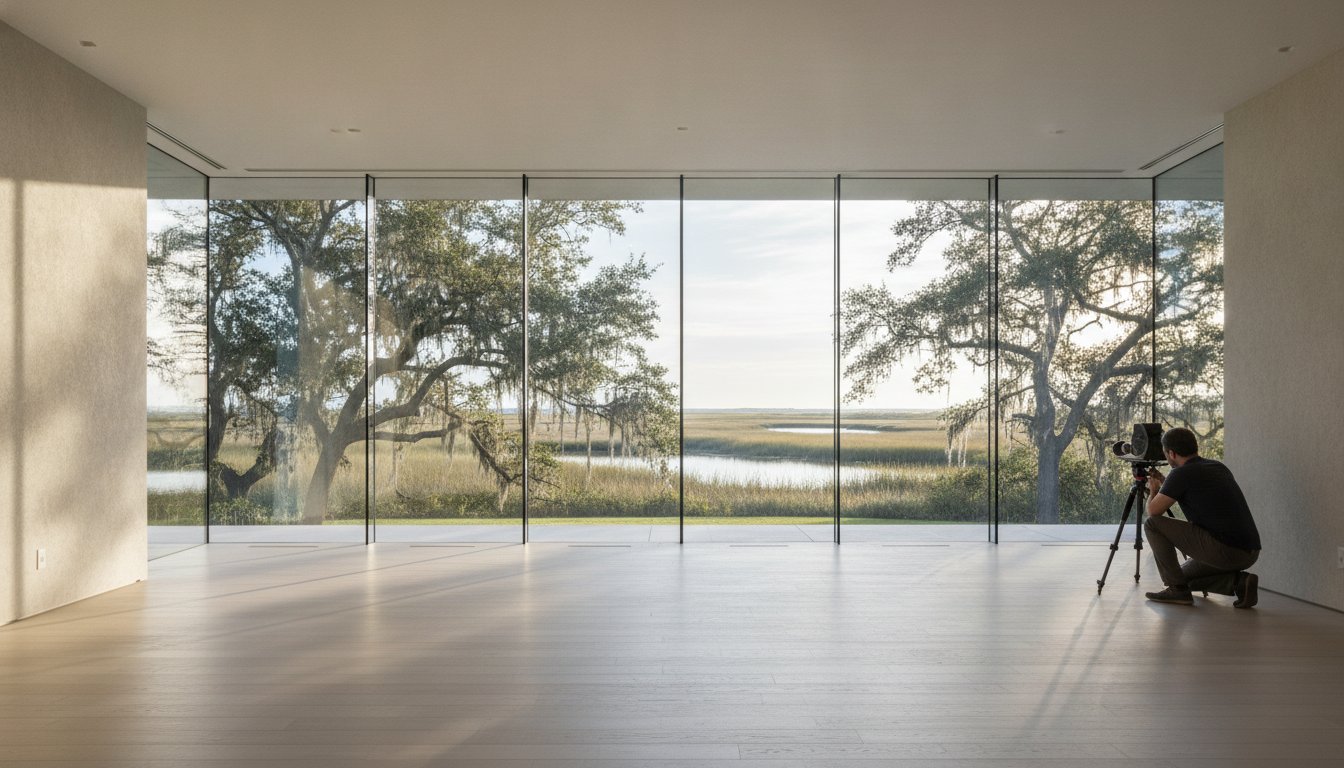
An empty room isn't a blank canvas; it's a finished masterpiece of architectural intent that often demands more technical precision than a fully staged home. You've likely seen how a vacant property can feel cavernous and cold, or how wide-angle lenses can distort the very walls a builder spent months perfecting. Achieving excellence in luxury interior design photography hilton head requires a deep understanding of how to translate these raw spaces into high-end assets that speak to sophisticated buyers. We recognize that a vacant listing must do more than simply show a room's dimensions; it must celebrate the architectural integrity and structural craftsmanship of the property.
This guide promises to help you master the technical and aesthetic nuances of capturing vacant properties with editorial-level quality. We'll examine spatial clarity, tonal restraint, and the specific techniques needed to maintain vertical alignment while managing the intense, high-contrast light typical of our coastal environment. You'll learn to produce properly composed shots that attract luxury interest and serve as perfect foundations for high-end virtual staging, ensuring every frame reflects the true potential of the Lowcountry's finest homes.
Key Takeaways
• Understand why capturing raw spatial integrity is vital for high-end architectural portfolios and builder referrals.
• Discover why the 17mm to 24mm focal range is the professional standard for luxury interior design photography hilton head, avoiding the distortion of typical wide-angle shots.
• Learn the light bulb audit and deep-cleaning protocols that prevent technical flaws from undermining a property's craftsmanship.
• Master the art of dual-purpose framing to provide sophisticated assets for both active listings and future virtual staging projects.
• Recognize the value of an editorial eye in translating vacant spaces into compelling narratives that resonate with affluent buyers in the Lowcountry.
The Architectural Case for Empty Room Photography
For custom builders and luxury architects in the Lowcountry, the completion of a project represents years of meticulous planning and craftsmanship. While staging provides a lifestyle narrative, vacant property imagery serves as the definitive record of the home’s structural excellence. Highlighting the intricate crown molding in a Palmetto Bluff estate or the precise joinery of a custom kitchen in Sea Pines requires a specialized eye. These shots aren't placeholders for future furniture; they're architectural portraits that validate the quality of construction. By focusing on the bones, professionals can showcase the premium materials and spatial logic that define high-end residential work through expert luxury interior design photography hilton head.
There's a specific psychological advantage to spatial clarity. For the luxury buyer, an empty room provides the mental space to project their own vision without the distraction of someone else's aesthetic choices. This transparency builds trust. It proves that the home doesn't need to hide behind decor to impress. When executing luxury interior design photography hilton head, the goal is to document the home's permanent features with the same reverence a designer would give to a bespoke sofa. This approach transforms a vacant house into a compelling architectural statement that resonates with sophisticated clients who value integrity over artifice.
Spatial Clarity vs. Clinical Emptiness
A common mistake is treating a bare room as a void. A curated architectural space uses volume and perspective to tell a story. We use leading lines, such as the edge of a coffered ceiling or the grain of wide-plank flooring, to define the room's dimensions. Adhering to fundamental Architectural photography principles ensures that the focus remains on the structural integrity rather than just the vacancy of the room. This perspective emphasizes the relationship between floor and ceiling, illustrating how light moves through the intended volume of the space without feeling sterile or uninviting.
The Role of Natural Light in Vacant Interiors
Empty surfaces are notoriously unforgiving. Without furniture to break up the light, every reflection and shadow becomes a focal point. We prioritize soft, directional coastal light to add warmth and texture to plaster walls and stone floors. Shadows are essential here; they define depth and prevent a room from looking like a flat, two-dimensional rendering. Our approach to Professional Property Photography avoids the artificial, overprocessed look of standard HDR. Instead, we focus on tonal restraint and realism, capturing the sophisticated atmosphere that only natural Lowcountry light can provide.
Technical Precision: Gear and Composition for Vacant Interiors
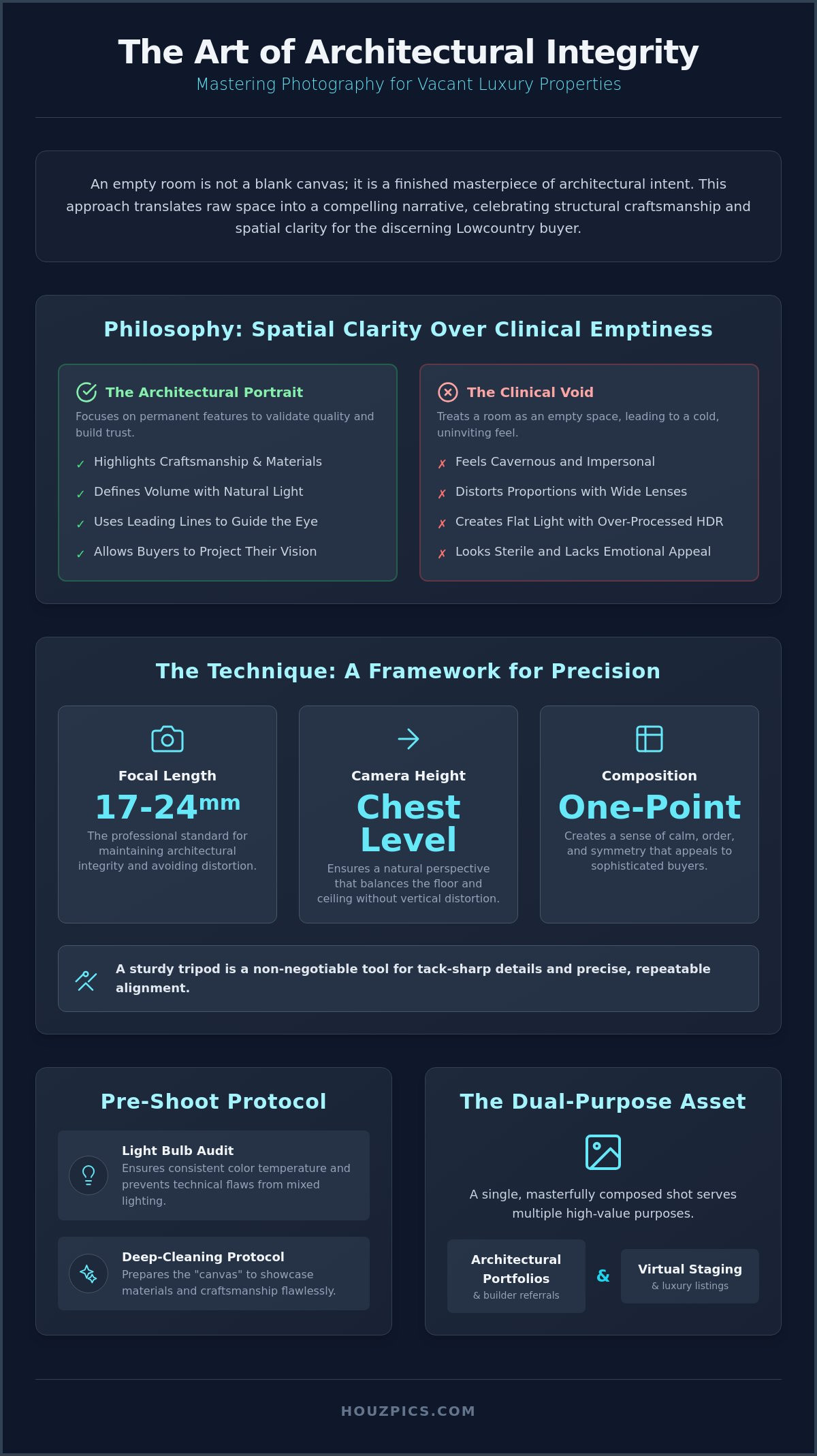
Capturing the essence of a vacant luxury home requires a departure from standard real estate photography tactics. While many photographers reach for the widest lens in their bag to exaggerate room size, this often results in distorted walls and unrealistic proportions that detract from the property's value. In the context of luxury interior design photography hilton head, the technical sweet spot usually exists between 17mm and 24mm. This range allows for a generous field of view while maintaining the architectural integrity of the space. A sturdy tripod is a non-negotiable tool; it ensures every detail remains tack-sharp and allows for the precise adjustments needed for a one-point perspective shot.
Maintaining a consistent camera height is equally vital for a refined result. We generally shoot at chest level rather than eye level, as this creates a more natural perspective that balances the floor and ceiling equally. This height prevents the leaning effect that occurs when a camera is tilted to capture high-end millwork or vaulted ceilings. Mastering professional interior photography techniques involves understanding how these subtle shifts in positioning can dramatically change the perceived quality of a room. For properties featuring expansive views of the Lowcountry marsh or waterfront, this precision allows us to frame the exterior landscape as a deliberate architectural element.
Achieving a symmetrical one-point perspective provides a sense of calm and order that appeals to the sophisticated buyer. This composition aligns the camera sensor parallel to the back wall, creating a clean, balanced image that highlights the room's proportions. To ensure your portfolio reflects this level of meticulous detail, consider how Professional Property Photography can elevate the presentation of your next project. By focusing on these technical nuances, we translate empty rooms into assets that showcase construction quality and spatial potential.
Perspective Correction and Vertical Alignment
Vertical lines must remain perfectly straight to preserve the home's architectural dignity. When a camera is tilted up or down, it creates keystoning, which ruins the perception of high ceilings and straight walls. We use tilt-shift lenses or advanced post-processing to ensure every vertical element is plumb. This technical discipline is what separates an editorial-quality image from a casual snapshot, reinforcing a commitment to quality and precision that luxury clients expect.
Exposure Bracketing for Realism
Natural-looking windows are a signature of professional work, especially in coastal environments where the light is intense. We avoid the flat, muddy look of overprocessed HDR by using exposure bracketing to blend multiple frames manually. This preserves tonal restraint in the shadows and keeps the view through the window clear and realistic. Whether using a flambient approach or pure natural light, the goal is always to maintain the authentic atmosphere of the space without artificial color shifts.
Preparing the Canvas: Detailing the Architecture
An empty room acts as a magnifying glass for every imperfection. Without furniture to draw the eye, the architectural surfaces of a Hilton Head estate become the primary subject. This transition from a construction site to a polished portfolio piece requires meticulous preparation. Dust, which might go unnoticed in a lived-in home, becomes strikingly visible on sun-drenched hardwood or polished stone floors. Professional luxury interior design photography hilton head demands a level of readiness where every surface is buffed to a streak-free finish to preserve the integrity of the materials. When the architecture is the only element in the frame, cleanliness isn't just about hygiene; it's a technical requirement for visual clarity.
This focus on perfection extends to the construction itself; for new developments, utilizing a professional service like Snag My Home to identify structural 'snags' ensures that the property is truly ready for its close-up, free from the minor defects that a high-resolution lens might otherwise reveal.
A critical yet often overlooked step is the light bulb audit. Consistency in color temperature is vital for maintaining a sophisticated atmosphere. We recommend ensuring all fixtures use bulbs within the 2700K to 3000K range to provide a warm, inviting glow that complements the natural Lowcountry light. Mixing these with 5000K daylight bulbs creates jarring blue and orange color shifts that look amateurish and are difficult to correct without sacrificing realism. Similarly, window treatments should be positioned with precision. Whether they're automated shades or custom drapery, they must be set at uniform heights to frame waterfront views without obstructing the architectural symmetry of the window casing.
Reflections on high-end flooring require strategic management. Polished marble or dark-stained oak can act like mirrors, catching unwanted glare from windows or interior lights. We manage these highlights to ensure they define the floor's texture rather than obscuring it. By controlling these reflections, we emphasize the depth and quality of the materials, ensuring the viewer's focus remains on the home's craftsmanship.
The Architectural Readiness Checklist
Before the first frame is captured, the property must be stripped of all non-architectural elements. This includes removing blue painter's tape, remnants of floor protection, or discarded hardware. We pay close attention to the smaller details that signal quality:
• Aligning HVAC vents so they sit flush and parallel to ceiling lines.
• Cleaning designer light fixtures to remove construction dust from glass and metal components.
• Positioning interior doors at consistent angles to showcase the home's enfilade views and natural flow between rooms.
Managing Surface Textures
Capturing the tactile quality of a home is essential for builders and designers. When photographing high-gloss tabby or marble, we use specialized positioning to minimize distracting glare while preserving the material's depth. For reclaimed heart pine flooring, the goal is to highlight the natural grain and historic character that defines many Lowcountry properties. We apply similar precision to walls finished with Venetian plaster or custom millwork—often executed by experts like Hudson Line Painters—using directional light to reveal the subtle textures that define a bespoke luxury interior design photography hilton head project.
Strategic Perspectives: Framing for Portfolios vs. Virtual Staging
A single photography session in a vacant luxury home often serves multiple professional stakeholders. While a Realtor requires imagery that facilitates a swift contract, the custom builder or architect needs assets that document their technical legacy. When we execute luxury interior design photography hilton head, we approach the property with this dual-track strategy in mind. We capture the broad, illustrative shots of the floor plan alongside tighter, detail-oriented frames that highlight the "Hero" elements of the construction. Whether it's the precise joinery of a custom mahogany entryway or the seamless transition between a stone foyer and reclaimed heart pine flooring, these details validate the property's premium status.
To provide a complete narrative of the property, we often integrate Drone & Aerial Imagery. This high-altitude perspective is vital for vacant properties, as it establishes the home's footprint within its private club community or its proximity to the water. It helps potential buyers understand the property's scale and its relationship to the surrounding Lowcountry landscape, providing context that interior shots alone cannot convey. By combining these aerial views with grounded architectural portraiture, we create a comprehensive visual package that serves both the immediate listing needs and long-term marketing goals.
If you're looking to showcase a recent completion with this level of strategic precision, schedule your Luxury Real Estate Photography session to ensure your portfolio reflects the true quality of your craftsmanship.
Shooting for Virtual Staging Compatibility
Creating images for virtual staging requires a disciplined, technical approach that differs from purely editorial work. While architectural photography often favors lower camera heights to emphasize ceiling volume, virtual stagers need eye-level perspectives to place furniture realistically. These angles provide the most accurate ground plane for digital artists to match the furniture's scale and perspective. We also provide "clean plates," which are secondary exposures designed to make window masking and light matching more precise in post-production. This foresight ensures that the final staged result looks integrated rather than superimposed.
The Editorial Detail Shot
The editorial detail shot is where the craftsmanship of a Hilton Head home truly shines. We move beyond the wide-angle view to focus on the intersection of materials; perhaps where a hand-applied Venetian plaster wall meets a custom-carved mantel. By using a shallower depth of field, we create a lifestyle atmosphere even in an empty space. These shots highlight the tactile quality of the build, showing buyers the level of detail they can expect throughout the property. This focus on material integrity helps builders and designers showcase their specific contributions to the project's success.
Partnering for Professional Property Presentation
Luxury listings in the South Carolina Lowcountry demand an editorial eye that understands the nuance of space before it's lived in. A standard point-and-shoot approach fails to capture the subtle intentions of an architect or the precise execution of a custom builder. By partnering with a studio that prioritizes technical credibility, professionals can ensure their work is documented with the respect it deserves. High-end architectural imagery isn't just a marketing expense; it's a strategic asset that communicates quality and attention to detail to a discerning audience. This is particularly vital for custom builders who need to showcase their craftsmanship in a pre-furnished state, where the quality of the "bones" is the primary selling point.
Our commitment to architectural integrity means we focus on the realism of a space. We recognize that the sophisticated Hilton Head market values restraint and craftsmanship over flashy, unrealistic editing. By mastering the balance of natural light and structural symmetry, we provide visual proof of a project's success. This technical foundation builds lasting trust with architects and designers who require their portfolios to reflect the exact standards of their physical builds. When you present a vacant property with spatial clarity and tonal restraint, you validate the professional referral and reinforce your status as a leader in the local luxury real estate ecosystem.
The Houzpics Architectural Media Standard
We've developed a rigorous process for capturing the distinctive Lowcountry aesthetic found in private communities like Palmetto Bluff and Sea Pines. Our approach to Luxury Real Estate Photography avoids the pitfalls of overprocessed HDR, which often results in muddy shadows and artificial colors. Instead, we preserve a realistic tonal range that honors the materials used in the construction. This dedication to quality supports the local luxury ecosystem by providing Realtors and builders with media that stands up to the scrutiny of high-net-worth buyers. We believe that the property's natural light should be the star of the frame, not the editing software.
Elevating Your Professional Portfolio
Consistent, high-quality visual assets are the foundation of a referral-ready brand. When your portfolio showcases the raw architectural potential and spatial clarity of a vacant property, you demonstrate a deeper understanding of luxury presentation. These photos don't just sell a single listing; they win the next contract by proving your commitment to excellence. If you're ready to document your craftsmanship with an editorial perspective, book your architectural session to showcase your next project. Investing in expert luxury interior design photography hilton head ensures your professional legacy is captured with the precision it demands.
Refining the Architectural Narrative
Empty rooms are not mere voids; they're the purest expression of an architect's vision and a builder's technical skill. Success in the market hinges on a meticulous light audit, perfect vertical alignment, and an editorial eye that avoids the distortion of typical real estate imagery. This approach ensures your property maintains its dignity while speaking directly to the ambitions of elite buyers and industry professionals. By focusing on the structural bones, you provide a foundation for both immediate sales and long-term portfolio growth.
Our studio remains dedicated to providing architecturally literate and technically precise media for the most prestigious Lowcountry estates. We specialize in editorial-quality imagery for elite Realtors and builders who demand luxury interior design photography hilton head. It's about integrity. Every frame should reflect the quality of the build, from the grain of the reclaimed heart pine to the precise symmetry of the crown molding. We look forward to helping you showcase your next project with the sophistication it deserves.
Elevate your property presentation with professional architectural photography.
Frequently Asked Questions
Do empty rooms look smaller in photos?
Empty rooms often appear smaller because the human eye lacks familiar reference points, such as a sofa or dining table, to gauge scale. Without these anchors, the brain struggles to perceive the true volume and depth of a space. We counteract this effect through precise camera positioning and the use of natural light to define corners and architectural boundaries, ensuring the room's dimensions are accurately represented.
Should I leave the lights on or off when photographing an empty room?
We generally recommend keeping interior lights off to preserve the purity of the natural Lowcountry light. Mixing artificial light with coastal sunlight often creates conflicting color temperatures that can make a luxury interior look muddy or yellow. If the home features bespoke designer fixtures that are central to the architectural narrative, we may use them sparingly to highlight specific craftsmanship while maintaining tonal restraint.
What is the best time of day to photograph a vacant home in the Lowcountry?
The optimal time depends entirely on the property's orientation, but early morning or late afternoon typically provides the most flattering results. During these windows, the sun is lower in the sky, casting soft, directional light that adds depth to empty walls and highlights the texture of premium materials. Midday sun in Hilton Head can be harsh, often resulting in blown-out windows and deep, unattractive shadows on interior surfaces.
Is virtual staging better than photographing an empty room as-is?
Neither approach is objectively better; they serve distinct marketing purposes. Photographing a room as-is captures the architectural integrity and construction quality, which is essential for builder and architect portfolios. Virtual staging is a powerful tool for helping buyers visualize a lifestyle within the space. We often provide high-quality vacant shots that serve as the perfect foundation for realistic digital furniture placement.
How many photos do I need for a vacant property listing?
Quality and intentionality should always take precedence over the total number of frames. For a luxury property, 20 to 30 meticulously composed images are usually sufficient to document the architectural flow and key structural details. Providing too many repetitive shots can dilute the impact of the home's most impressive features and overwhelm a potential buyer's interest.
What lens is best for real estate photography of empty rooms?
A 17mm to 24mm tilt-shift lens is the professional standard for high-end interiors. This focal range allows us to capture the breadth of a room without the unrealistic fisheye distortion common in cheaper wide-angle lenses. These specialized lenses also allow for perspective correction on-site, ensuring that all vertical lines remain perfectly plumb and the architectural dignity of the home is maintained.
Do I need to hire a pro, or can I use my phone for vacant interiors?
Professional gear and expertise are essential for managing the high-contrast light typical of our coastal environment. Phone sensors lack the dynamic range required to balance a dark interior with a bright waterfront view, often resulting in "white" windows or dark, grainy corners. Professional luxury interior design photography hilton head ensures that the property's value is protected through technical precision and editorial-quality presentation.
How do I avoid reflections on large windows and glass doors?
Avoiding reflections requires a combination of specialized filters and strategic camera placement. We use circular polarizers to cut through glare on glass and high-gloss flooring, ensuring that the viewer sees the view or the material rather than the camera equipment. Additionally, we carefully time our shoots to avoid direct sun hitting large glass spans, which can create distracting hot spots and reflections that obscure the architectural detail.


